 Home
Home

News and opinions
Institutionalized Impunity: A Threat to Peace and Justice – Ben Turok Memorial Lecture 2025
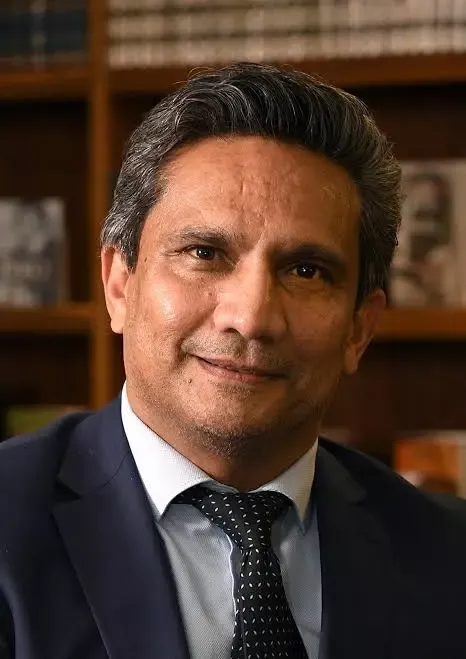
Mr. Zane Dangor, Director-General of DIRCO
This is Zane Dangor’s address at the 5th Ben Turok Memorial Lecture, held on 27 November 2025.
I want to start by be extending my gratitude to the Ben Turok Foundation for extending an invite to me to speak in his honour this evening. Ben Turok exemplified the ethos of struggle and work for a democratic and more equal South Africa. I remember his guidance while we were both active in civil society organisations working towards social and economic justice. He provided valuable counsel while I was writing my Masters research report on GEAR.
I will discuss the key principles that inform our foreign policy and frame the discussion on impunity through outlining our approach to the War on Gaza as this not only sheds light on our foreign policy, but the differential approaches to issues of human rights and international law.
I will also reflect on our G20 Presidency. Our planning documents, including the Medium Term Expenditure Framework is framed by the tagline of a “better South Africa, a better Africa and a better world”. We make the argument that a better South Africa is not possible without a better Africa and indeed a better world. Therefore, by supporting peace and stability on our continent, peace and stability in other parts of the world we are promoting Africa’s development and creating the environment for inclusive and sustainable growth in South Africa as well. In essence, we operate from the assumption that without dealing with the structural inequities in the world, including transforming the institutions of global governance which are still instruments for perpetuating the power and influence of former colonial powers, we will not be able to optimally deal with many of our political and developmental challenges. Therefore, by working towards greater cooperation between countries on things like climate change, international crime, terrorism, solidarity based economic and trade relations, production and financing for development, we strengthen our efforts to tackle developmental challenges in our own country.
South Africa’s foreign policy principles are informed by our constitution, and its values which includes a commitment to human rights, valuing freedom and democracy and pursuing peace centered approaches to resolving conflicts. This partially informed by the call of the Freedom Charter that ‘There shall be peace and freedom’. Over the years, South Africa has taken bold steps in executing its foreign policy particularly on peaceful resolution of conflicts and an now, an overtly anti-war stance. We are one of only two countries in the world that voluntarily dismantled its nuclear weapons programme, and joined disarmament, non-proliferation and arms control instruments. Ukraine is the other country. Over the years, South Africa has deployed its peacekeepers in different countries such as Burundi, DRC, Mozambique and Sudan. The role of these keepers has been the maintenance of peace as opposed to starting the war. South Africa has been instrumental in mediation by bringing together warring parties notable through Sun City process, where Congolese parties came together and signed a peace deal that led to the first democratic elections in 2006.
Recently, South Africa hosted AU led negotiations between the Ethiopian government and Tigray People’s Liberation Front (TPLF). In June 2023, President Ramaphosa and some AU leaders of six countries embarked on an Africa’s peace mission to Ukraine and Russia in effort to end the ongoing war. It was the first time that African States have took the lead to seek a peaceful resolution of a conflict outside the Continent. Recently, South Africa brought its case to the International Court of Justice accusing Israel of violating the Genocide Convention in its military operation Gaza that has led to thousands of deaths of innocent civilians including children. The key request was for the court to order Israel to immediately halt its military operations in Gaza. Perhaps, though in asking and answering the question, “Why did South Africa invoke the Genocide Convention?” can we assess our own commitments to peace and international law, can we locate our role in a fractious and contradictory globe. In our application, our oral presentations to the ICJ and subsequent further requests for further provisional orders, we were guided by our obligation as a signatory to the Genocide Convention to prevent and punish acts of genocide, including the incitement to genocide.
The respective pleadings by the South African and Israeli legal teams were so vastly different in scope, evidentiary basis and quality that it is no surprise that most of the globally recognised scholars and practitioners of international law, including people like Professor Willam Schabas have described South Africa’s case as unassailable. Schabas posited that a ruling against South Africa would perhaps concretise the notion that the institutions of global governance are designed to protect countries and individuals of the ‘west’ and only hold to account those that are deemed to enemies of the ‘west’. South Africa would not want to see the further degradation of trust in the institutions of global governance as we believe that these institutions, despite its current flaws hold the promise for a world where disputes between states are resolved through dialogue and negotiation and where those who breach the just rules and norms of the international community are held to account without fear and favour. The latter point, is the short answer to the ‘why’ question that we are often asked. As we state in our pleadings, South Africa approached the ICJ, as under Article 1 of that Convention, we are duty bound to act to prevent and punish acts of genocide. It is surprising that other member states are not being asked, why have they not and are not acting to prevent and punish genocide and also why some are unhappy that South Africa has requested the highest judicial organ of the United Nations to deliberate whether its allegations of genocide has merits.
We have also been asked, “why then did you not join Ukraine in its case against Russia”?. Ukraine approached the ICJ to challenge the proposition put forward by Russia that it (Russia) attacked Ukraine for amongst other reasons that Ukraine was involved in genocidal acts against Russian speaking communities in Ukraine. Ukraine did not accuse Russia of genocide but wanted the court to proclaim that Russia’s claims of genocide by Ukraine was without merit and therefore, Russia had no legal basis to attack Ukraine militarily. Russia was therefore not charged with engaging in the acts of genocide. The question of why we did not join the case accusing Russia of genocide is misplaced. Unlike the few commentators domestically, who want to ascribe malicious political motives for South Africa’s actions in the Hague, the vast majority of countries, globally and indeed ordinary people from countries in all corners of the globe recognise that South Africa’s actions were necessary to stop a text book case of genocide, to save the lives of thousands of people, including children in Gaza and to end the institutional impunity which Israel has been enjoying for decades, and, which has emboldened their unlawful killing of Palestinian people in Gaza and other occupied territories.
The unfolding horrors following the various orders of the ICJ indicated to many in the world that Israel continues to act with impunity and disregard for international law, because, it has been enabled to do so by the some of the so-called apex powers in the world. The recent decision to increase military aid to Israel by the US underscores this. Amnesty International’s latest reports state that powerful governments have cast humanity into an era devoid of international law and that this puts civilians in all conflicts at extreme risk. They reference the multiple conflicts but do indicate the institutionalised impunity so prevalent in Gaza now and in the Occupied Palestine over the last 5 decades. Our approach to the ICJ and our overall stance is in keeping with our stated principles and obligations. This is what we should be doing and we should be engaged in similar actions consistently. If we have fallen short of the mark in terms of these principles, in other situations then by all means call us out. Let us explain our positions but don’t say to us, ‘do not work to save lives in Gaza’. We will respond and not necessarily defensively, but we will be able to demonstrate that over the last 30 years and especially since 2019 we have been one of the more consistent countries in marrying the often contradictory principles underpinning international relations and international law. We were certainly not ignorant of the potential economic fallout as claimed by those seeking to defend the actions of Israel. South Africa’s actions were motivated by the need to save lives of innocent non-combatants from armed attacks by the state of Israel and to prevent many thousands more dying from hunger and disease. While there are a few civil society and governmental actors that of course vocally opposed the official government position we are supported by many civil society organisations that oppose the occupation and its attendant violence. Of course we should be happy that such diverse opinions are still welcomed in South Africa, where commitments to fundamental freedoms are not set aside for political expediency.
It is in this context of both praise and opposition that South Africa took over the G20 Presidency. Geopolitical rivalries, economic fragmentation, unilateral trade measures, and climate emergencies, among others, made our work this year, more challenging. For decades, multilateralism has been shaped largely by the influence of powerful states. However, middle powers—countries with significant regional influence, credible diplomatic capacity, and a commitment to rules-based cooperation based on international law—indeed have an important role in upholding the multilateral system, while continuing to pursue reform efforts and enhancing international solidarity. President Ramaphosa, on the occasion of the General Debate of the 80th Session of the United Nations General Assembly in September, called on all UN member states to advance cooperation and solidarity, and to promote multilateralism and safeguard the institutions that enable it. Middle powers represent different economic sizes, political systems and geographic roles, but share a commitment to multilateralism, regional leadership and a broader understanding of development and justice.
In this regard, South Africa values our strong bilateral relations with Norway, who is also continuing to play a constructive role as a G20 guest country. The influence of middle powers is not rooted in hard power, but often in moral authority and regional legitimacy. South Africa derives part of its middle power identity from its role in the African Continent, its moral standing post-apartheid, and its active participation in multilateral forums, such as the AU, UN, BRICS and the G20. This year was the first time that the G20 Leaders’ Summit was held on the African Continent, the Cradle of Humankind, under South Africa’s G20 Presidency and guided by the theme of Solidarity, Equality and Sustainability. The G20 remains a unique bridge between the Global North and South. Middle powers within the G20 can act as honest brokers—advancing fairer trade rules, equitable climate finance, just energy transition, debt reform, addressing global inequality, and reforms to global governance institutions—as we face the current critical inflection point for the state of multilateralism described in our concept note for today’s event.
Global crises—be it global health, conflicts, or economic disruptions—can be opportunities to mobilise coordinated regional and multilateral action. Effective responses to global crises are not the monopoly of the powerful. Middle powers and regional institutions, when acting in solidarity with common purpose and strategic vision, can ensure that multilateralism is not only about states, but also about people— addressing poverty and inequality, protecting human rights, and ensuring that global consensus and decisions translate into local action and impact. Our collective membership of multilateral institutions and organisations is our shared humanity in action, enabling us to rise to the occasion and do our utmost together to ensure the political, economic and social freedom of all humanity. In this, we reaffirm that freedom is indivisible and that the denial of the rights of one person diminishes the freedom of us all; and to leave no-one behind.
The multilateral institutions established after the Second World War—the UN, IMF, World Bank and WTO—have been instrumental in shaping norms and rules. However, these institutions have also been complicit in reproducing and perpetuating global inequalities, with governance systems skewed in favour of the Global North. In a context where the effectiveness of these institutions is being challenged, plurilateral structures such as the G20 and BRICS have demonstrated their effectiveness in the financial sector, with institutions such as the New Development Bank, in the case of the BRICS; and in the ability to address systemic financial and economic challenges in the case of the G20. Pro-active engagement in these structures by South Africa, Brazil, India and others have made significant impact towards achieving a fairer global economic architecture to address global inequality and poverty. This has also offered a counterweight against the unilateral actions of hegemonic major powers, and aligns with the shared vision of collective problem-solving among middle powers and developing countries, the very essence of multilateralism.
This principled and pragmatic multilateralism has become a shield and dynamic vehicle for change against powerful states who unilaterally impose their will. The constructive role of middle powers in shaping global democratic norms around peace, security and sustainable development is tied to their commitment to inclusive governance. South Africa’s role in the G20, its focus on integrating the African Agenda into global discourse, and its calls for global solidarity and justice, are part of this broader effort of pro-actively reorienting the normative foundations of global cooperation. For South Africa, the G20 is one of the platforms that can effectively complement existing multilateral efforts within the UN System. South Africa’s priority on solidarity is not only based on solidarity with the Global South, but also in advancing partnerships with countries of the Global North and with civil society.
There is an opportunity in the current global climate of polycrises to strengthen existing partnerships and forge new partnerships, with a focus on working with the global majority with whom we share common interests. In the same way, Africa’s engagement with external partners is also guided by a clear and strategic understanding of its own interests. Our Continent is moving away from passive recipient roles to assertive partnership-building. In this, Africa is also reclaiming its story—not as one of perpetual crisis, but as one of resilience, creativity and potential. South Africa’s successful hosting of the G20, even without one of its members who choose not to participate, is testament to the effectiveness of multilateralism.
At the heart of this network of multilateral partnerships, including the AU, regional organisations and the G20, amongst others, the United Nations remains our premier multilateral institution. Multilateralism is not failing, but its institutions need reform to continue to focus multilateral efforts to stop wars, guarantee human rights and bring about sustainable development, which is a guarantee for a peaceful and prosperous future. Transformation is possible, but it requires courage, imagination, solidarity and sustained collective effort. Middle powers, the Global South, and African states are not just passive subjects of global systems—they are co-creators in shaping the future of multilateralism.
The actions of the powerful including the latest missive on social media by the President of the United States in relation to South Africa’s participation in the G20 to be hosted by the US is indicative of a resurgence of colonial era politics where might makes right. Indeed, institutionalised impunity for the powerful is steeped in the history of colonialism and indicates that a martial culture not only persistent but is condoned when the victims are the international law sub-alterns, that is, ‘non-western’ people and countries. War and international law are only invoked when the victims are ‘western’. This martial culture poses a danger to all of humanity. Contestation for power, influence, resources and territory through the use of force, has the potential to destroy all of humankind and the planet that sustains us.
The potential use of nuclear weapons in the current wars in Europe and the Middle East cannot be ignored. We need a reset in global political culture that is catered on mutuality, cooperation, peace and justice wherein diplomatic actions seeks to build global well-being. That is, a world where the use of force is replaced by dialogue and negotiations, and where force is actually prohibited. This will require changes to the UN Charter. The same UN and its related institutions and norms must be reconfigured so that it is transformed from protecting previous empires to a system that regards all people and countries equally and is geared towards being the engine for inclusive development. This will assist in dealing with the root causes of conflicts.
I want to conclude with a more domestic caution. The colonial culture of superiority emanating from the US has resonance in many parts of the world, including South Africa. The US has made it clear that their major gripe with South Africa are our redress policies that they regard as anti-white and falls within the misinformation framework of a white genocide. These are the reasons proffered by the US for seeking to exclude South Africa from next year’s G20. This misinformation was initiated and amplified by South African individuals and organisations.
The reaction from many South Africans indicate that unless we respond and engage with the resurgence of racism in South Africa, the already tenuous goals of reconciliation and building a more equal society will become harder. Civil society must make transformative constitutionalism central to their work. Transformative constitutionalism involves using the supremacy of the constitution, as opposed to racial supremacy, to shape the social and economic transformation of South African society towards equality. Former Constitutional Court Judge Chaskalson expanded on this by writing that the realisation of the inherent right to dignity, which is a foundational value within the South African constitution, requires that the state fulfills its obligations to the best of its abilities to ensure that people have access to all the rights required for the “achievement of equality” which is also a foundational value of the South African Constitution. This means that the state is obliged to ensure that, within its means, it facilitates access to land, water, decent housing, health care, food and social security. Transformative constitutionalism therefore posits that the constitution and therefore law, should be geared towards realising the right to dignity through amongst other measures, ensuring that all human rights including economic, civil, political and social rights are respected, fulfilled and realised.
We should not allow outside forces that are inimical to racial, class and other forms of solidarity, detract us from renewing our efforts to build a better South Africa.


